Intellectual property (IP) laws vary significantly from country to country, each with unique systems, definitions, and legal nuances. As a result, there’s no universal or “one size fits all” approach, especially when it comes to applying IP rights to content generated by AI. Likewise laws change over time, such changes generally happening faster for fast moving situations such as the rise of AI.
So, can AI-generated content be protected by IP rights? And if so, who owns it?
In this article we explore the major types of IP and examine how they apply in the context of generative-AI, along with real-world examples to bring the concepts to life.
Patents
Most countries including New Zealand do not allow patent protection for inventions generated by AI because a patent application requires the inventor to be named, to be a real person.
This was tested in the High Court in New Zealand in 2023 where a patent applicant attempted to name an AI system called DABUS as the inventor (see related article here). The High Court determined that only a person can be recognised as an inventor, consistent with rulings in other countries about the same invention.
While the Court system is not the right forum for policy change since, it did trigger global discussion on the need for ongoing legal review to keep up to date with the drastic and rapid changes in technology.
In this context, philosophical questions arise as to whether the AI is merely a useful “design tool” supporting a team of human researchers, is “a skilled digital assistant” working alongside the team but not necessarily capable of making an inventive contribution in its own right, or alternatively, is entirely capable of inventive activity in its own right and therefore the “actual devisor of the invention”.
So, as it stands, inventions with AI as the inventor cannot be protected by patents. However, the mere use of AI as a tool or assistant in helping to create an invention does not preclude a person from being the actual inventor.
Designs
Similar to patents, the main challenge is who qualifies as the owner. The NZ Designs Act 1953 outlines that the author of the design is the first owner of a design registration. But the Act contains no definition of author. AI is an author. It is just not a person.
The Act does say that “where the design is executed by the author for another person for good consideration, that other person shall be treated for the purposes of this Act as the proprietor.” This implies that the term "another person" indicates that the author must be a human individual.
Regardless of anything, a new product design must be visually different compared to prior art.
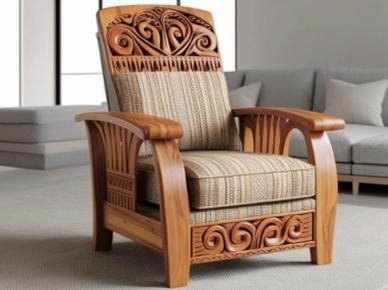
The chair pictured below was generated using a simple prompt in Canva, specifically "chair that has New Zealand design features." Aside from the risk that such designs may inadvertently disrespect cultural heritage (see How is traditional Māori knowledge recognised within New Zealand’s IP system?,) the current Registered Design laws do not offer sufficient protection for those aiming to establish exclusivity to commercialise works designed by AI.
Trade marks
AI-generated trade marks can be registered, as long as they fulfil the necessary criteria of distinctiveness, are not offensive, and do not infringe on existing trade mark rights. The registered trade mark belongs to the person whose name it is registered under.
For example, let's say a brand name was created using ChatGPT with the prompt, "Devise a brand name for a new chair and write a promotional paragraph in a humorous style." Here is what ChatGPT produced:
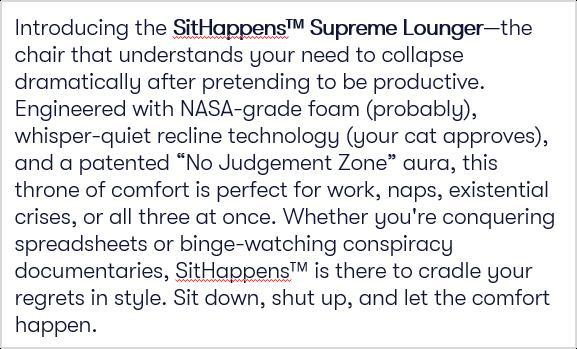
ChatGPT was then immediately prompted with, “Write a slogan for the SitHappens branded chair in a humorous style”, and it responded with this:
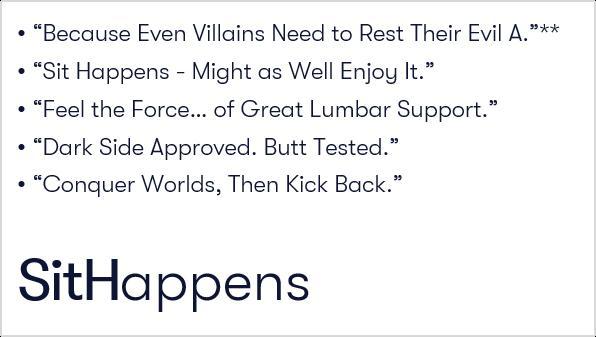
As you can see, ChatGPT has generated content that is potentially inspired by Star Wars. But why has the AI programme generated this?
Remember that the initial prompt was aimed at generating a brand name for a new chair and the subsequent prompt asked for related promotional slogans. However, the AI inadvertently linked the term "SitHappens" with "Sith", which if you chose to use or register might infringe the IP rights of others, such as Star Wars.
Copyright
In most countries, copyright protection only extends to original human-authored works including those made with AI assistance but not to works generated solely by AI.
NZ Copyright Act 1994 has different provisions about authorship compared to the Patent Act and Design Act. New Zealand has an exception for “computer generated works” which are defined as “a work generated by a computer in circumstances such that there is no human author of the work”.
The author of "computer generated works" is the person who makes the necessary arrangements for creation, such as selecting prompts for an AI tool. In contrast, the USA often requires a human author for copyright protection, meaning that AI-generated outputs may not qualify unless they involve significant human creativity.
The work below titled “Théâtre D’opéra Spatial” won Jason Allen first prize at the Colorado State Fair in 2022 before he revealed that it was created using an AI image generator program called Midjourney which generates images from language descriptions.
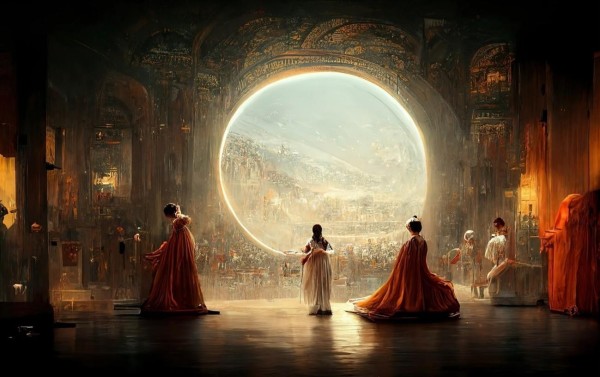
Mr Allen subsequently requested copyright protection in the US for this work claiming that he revised the Midjourney prompts at least 624 times to achieve the final work which he also edited with Photoshop.[1] The US Copyright Office Review Board found that, because Allen was “unwilling to disclaim the AI-generated material,” it was unable to recognise the work.
Based on New Zealand law, the artwork would likely attract copyright protection as a computer-generated work and meet the originality threshold given the AI tool prompts were revised 624 times.
IP ownership in the Terms and Conditions of use of an AI platform.
Terms and conditions about IP ownership of content created by generative-AI varies across the different platforms.
Most AI platforms allow IP rights in AI-generated content to be owned by the user. However there are exceptions and variations so it pays to always refer to the terms and conditions of the specific tool (refer to Risks and Guidance: Using GenAI in marketing materials).
IP is designed to balance the interests of creators and the public. There are many nuances to how IP can be applied to content created by generative-AI. As the technology continues to evolve, new challenges and opportunities arise for those who wish to protect their content. The law is likely to also rapidly change to keep pace of new technology and the implications it has on society.
If you would like to learn more about applying IP to AI-generated content, please reach out to our experts.
[1] https://ipwatchdog.com/2023/09/08/copyright-office-denies-registration-award-winning-work-made-midjourney/id=166498/